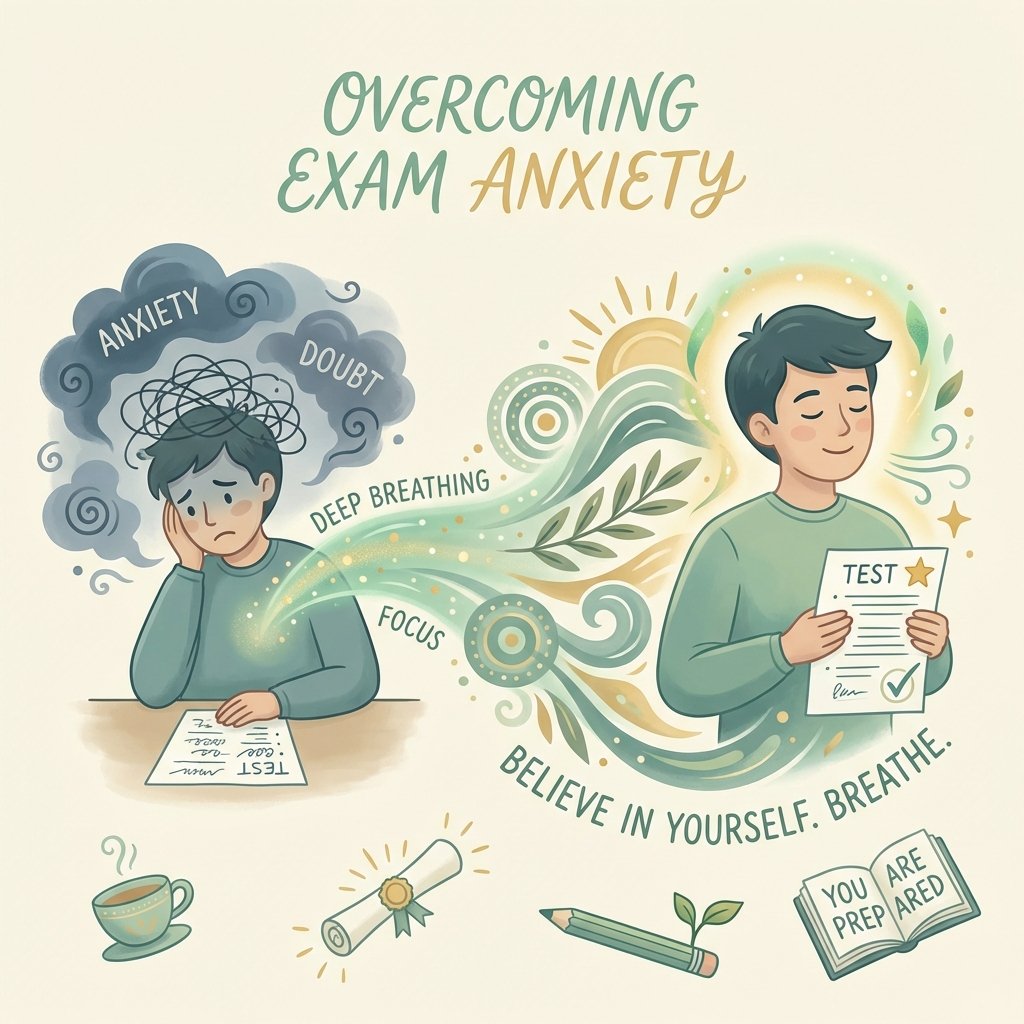
You've studied for months. You know the vocabulary. But as the test approaches, anxiety threatens to undermine all your preparation. Test anxiety affects learners of all ages and levels—and it's manageable with the right strategies.
Understanding Test Anxiety
Anxiety activates your fight-or-flight response, flooding your system with stress hormones. Your brain prioritizes survival over memory retrieval. That's why you can blank on words you definitely know, or make careless mistakes you'd never make in practice. The problem isn't your knowledge—it's your state.
Preparation Reduces Anxiety
Uncertainty feeds anxiety. Take practice tests under realistic conditions—same time limits, same environment, same materials. Know exactly what to expect: how many questions, how much time, what the interface looks like. Familiarity breeds confidence. Schedule your preparation so you're reviewing, not cramming, in the final week.
Physical Techniques for Test Day
Box breathing (inhale 4 counts, hold 4, exhale 4, hold 4) activates your parasympathetic nervous system, counteracting fight-or-flight. Progressive muscle relaxation—tensing and releasing muscle groups—releases physical tension. Arrive early enough to settle but not so early you have time to spiral.
Mental Strategies During the Test
Reframe anxiety as excitement—the physical symptoms are identical, and your brain believes what you tell it. When you hit a hard question, skip it and return later; don't let one question derail your focus. Use positive self-talk: "I prepared for this. I know this material."
Building Long-Term Confidence
Regular low-stakes testing reduces anxiety about testing itself. Track your improvement over time to build evidence-based confidence. Celebrate study wins, not just test results. Remember that HSK levels are designed to be achievable—millions of people pass these tests every year.
Build Test-Day Confidence
Avena's practice quizzes simulate real HSK conditions, so test day feels familiar, not frightening.
Practice Now